
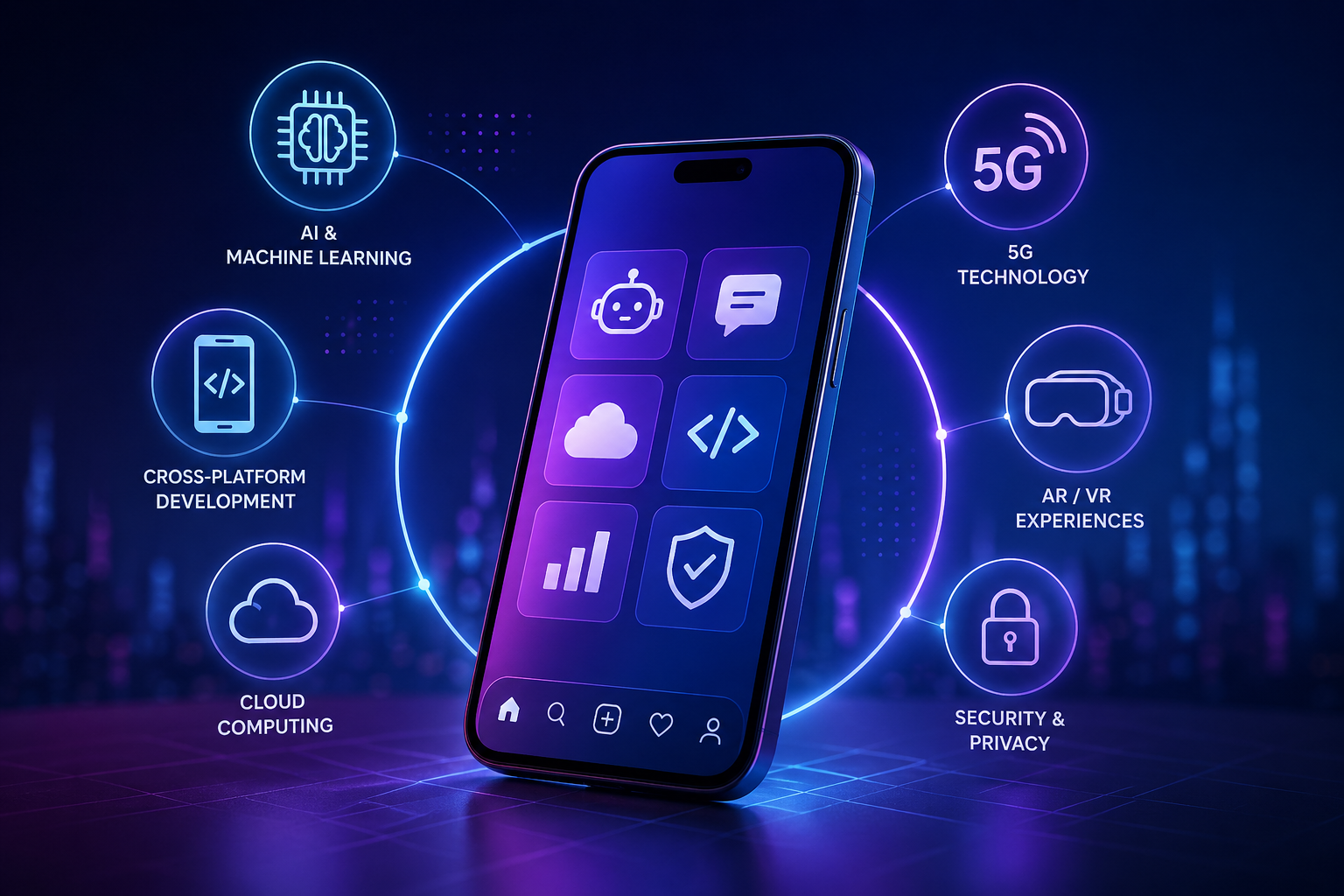
Mobile app development is growing very fast. Every year, new technologies change how apps are built and used. Today, users expect apps that are fast, simple, smart, and secure. If your app does not meet these expectations, users may uninstall it quickly.
In this blog, we will explore the future of mobile app development, key trends, and what businesses should do to stay ahead.
🔍 Competitor Analysis (What Others Miss)
Most websites (like Talentrise and similar companies) write blogs that:
- List trends like AI, 5G, and cloud
- Give basic explanations
- Focus more on services than user value
❌ Gaps in their content:
- No real-life examples
- No business impact explanation
- No guidance on what to choose
- No simple language for beginners
👉 This blog fills those gaps by:
✔ Explaining trends in simple words
✔ Giving real examples
✔ Showing business value
✔ Helping you take decisions
📊 Why Mobile App Development Trends Matter
Mobile apps are a huge part of today’s world:
- Google Play downloads may reach 143 billion by 2026
- App Store downloads may reach 38 billion
- The market is expected to grow to $616 billion+ in coming years
👉 Also, around 90% of apps are used once and then deleted
So, following trends is not optional—it is necessary.
🚀 Top Mobile App Development Trends
1. Artificial Intelligence (AI) is Becoming Core
AI is now the most important trend in mobile apps.
👉 Apps are becoming smarter:
- Personalized recommendations
- Chatbots
- Smart search
AI is no longer just a feature—it is becoming the foundation of app development
Example:
- Netflix suggests shows
- Amazon recommends products
👉 Future: Apps will understand user behavior automatically.
2. On-Device AI (Faster & Private)
Earlier, apps used servers to process data.
Now, apps process data inside the mobile device.
👉 Benefits:
- Faster performance
- Better privacy
- Works even offline
This is called edge or on-device AI
3. 5G Technology (Super Speed)
5G is changing how apps work.
👉 Benefits:
- Faster loading
- Real-time updates
- Better video and gaming
Apps can now support AR/VR and real-time data easily
4. Cross-Platform Development
Instead of building separate apps for Android and iOS:
👉 Developers now use one code for both.
Tools:
- Flutter
- React Native
👉 Benefits:
- Saves time
- Reduces cost
- Faster launch
This trend is growing because businesses want quick and affordable solutions
5. Super Apps (All-in-One Apps)
Super apps combine many services in one app.
👉 Example:
- Chat + Payment + Shopping
This trend is growing fast because users prefer everything in one place
6. AR & VR (Better User Experience)
Augmented Reality (AR) and Virtual Reality (VR) are improving app experience.
👉 Uses:
- Online shopping (try products virtually)
- Gaming
- Education
These technologies create interactive and engaging apps
7. Voice & Conversational Apps
Users now prefer talking instead of typing.
👉 Apps now support:
- Voice search
- Voice commands
- Chat-based interaction
👉 Future: Apps will work like conversations.
8. IoT Integration (Smart Devices)
IoT (Internet of Things) connects apps with smart devices.
👉 Example:
- Control lights from phone
- Smart watches
This helps businesses offer better services
9. Strong Security & Privacy
Security is now very important.
👉 Apps use:
- Face unlock
- Fingerprint login
- Data encryption
Users expect safe apps, so security is a must
10. No-Code & Low-Code Development
Now apps can be built without heavy coding.
👉 Benefits:
- Faster development
- Easy for beginners
- Low cost
This trend is helping startups build apps quickly.
📈 New Shift: Smarter & Automated Apps
Apps are changing from:
👉 Feature-based → Task-based
Example:
- Instead of clicking many steps
- App will do tasks automatically
AI will handle:
- Booking
- Searching
- Recommendations
👉 Apps will become more intelligent and automated.
💡 What Businesses Should Do (Practical Guide)
Most blogs don’t explain this clearly.
1. Focus on User Experience
Users want:
- Simple design
- Fast performance
- Easy navigation
2. Use AI Smartly
Don’t use AI just for trend
👉 Use it to solve real problems
3. Choose Right Technology
- Startup → Cross-platform
- Large business → Custom app
4. Keep App Simple
Too many features confuse users
👉 Simple apps perform better
5. Plan for Future
Build apps that:
- Can scale
- Can update easily
⚖️ Biggest Challenge in Future
Even with new trends:
- Too many features can make apps complex
👉 The biggest challenge is keeping apps simple and useful
✅ Final Conclusion
The future of mobile app development is:
✔ Smart (AI-powered)
✔ Fast (5G-enabled)
✔ Simple (better UX)
✔ Secure (privacy-focused)